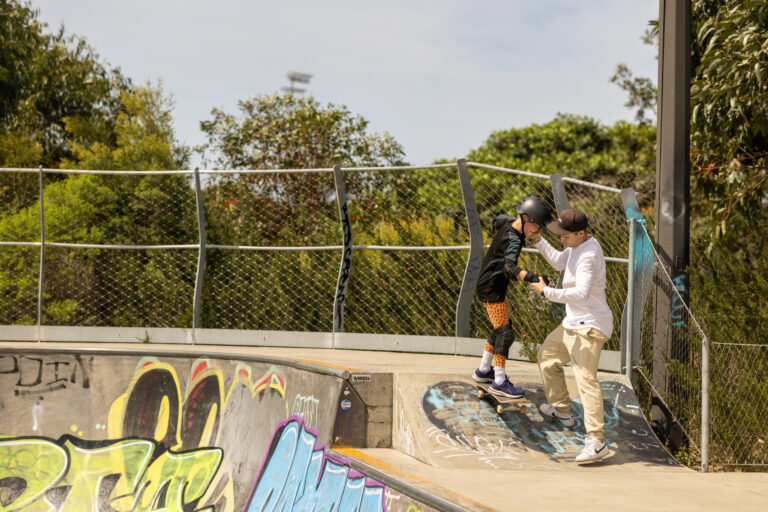
Most people who book a first lesson with me are a little nervous, and most parents want to know what their child will actually be doing for that hour. So here is a first lesson, start to finish, exactly as I run it at the skatepark.
Before you arrive
Wear comfortable clothes you can move in and flat, closed shoes with a grippy sole. Skate shoes are ideal, but any flat trainers will do. Bring water. You do not need your own skateboard; tell me when you book and I will bring one you can hire for the lesson. You do need a helmet, and I ask every student to wear one from the very first minute, whatever their age. Knee and elbow pads and wrist guards are required as well. If you have no gear yet, say so when you book and I will help you get sorted.
We meet at the skatepark you chose when booking. I will be easy to spot, and I will come and find you if you look lost.
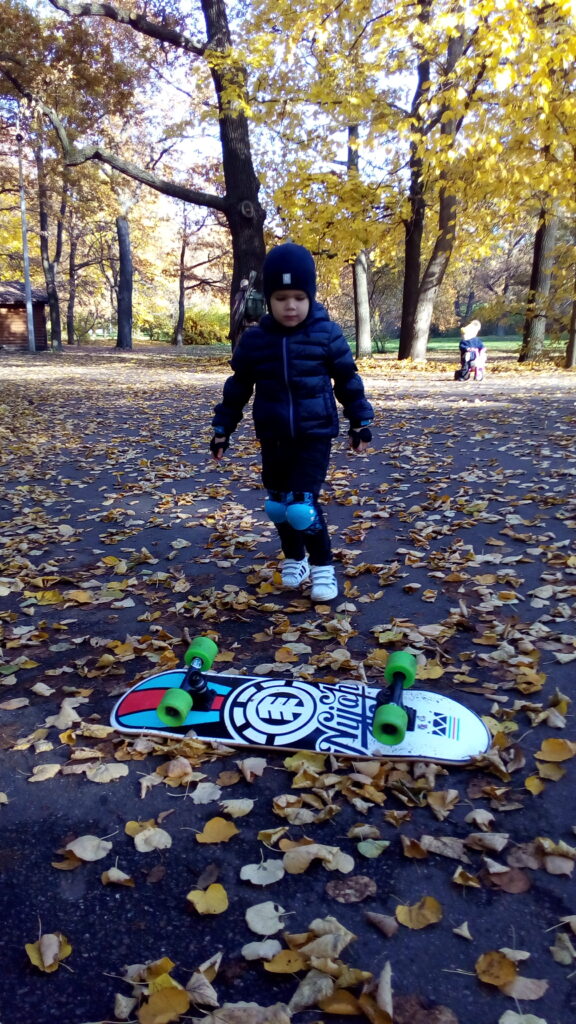
The first ten minutes: standing still
We start on flat ground, well away from the ramps and the busy parts of the park. Before anyone rolls anywhere, I look at how you stand on the board. Which foot goes at the front, where your feet sit over the bolts, where your weight is. Most of what comes later, from pushing to turning to your first trick, is built on this, so I take my time here. I hold the board still, or hold your hand, until standing on it feels ordinary rather than frightening.
Then we roll
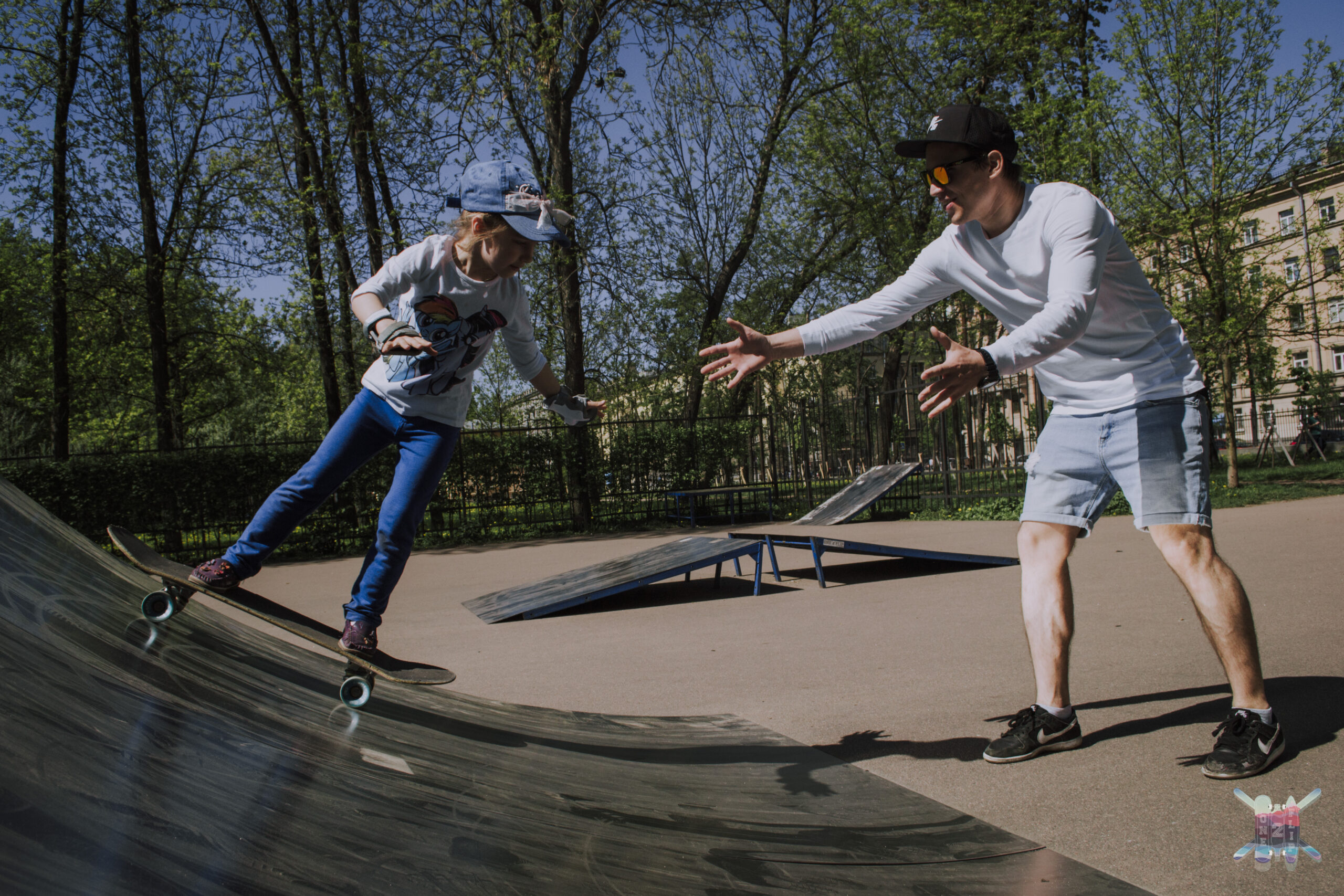
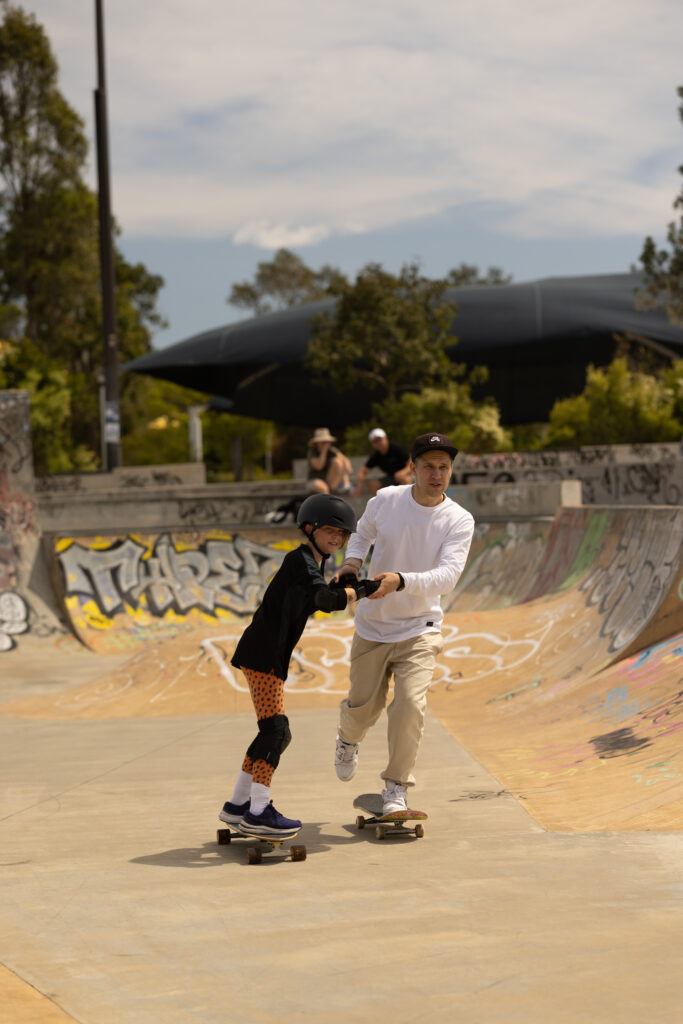
Once your stance is settled we push, at walking pace. One push, glide, feet back on the board, stop. Then two pushes. I walk beside you the whole time. Within twenty minutes most people, children and adults alike, are rolling short distances on their own and smiling about it.
I also teach you how to fall early, on purpose, on flat ground, so that if it happens later your body already knows what to do. Knowing how to fall is what makes people relax, and relaxed skaters learn quickly.
The last part: turning, stopping and a small challenge
With the basics in place we add turning, first by leaning and then with a small pivot, and a reliable way to stop. If there is time and you are ready, I will find one small challenge to finish on: a gentle slope, a very low bank, or simply a longer run across the park. Nobody is pushed to try anything before they are ready. Finishing the first lesson on a success is the point.
For parents
You are welcome to stay and watch, and many parents do. I hold a current Working With Children Check. Young children usually do best with a one-hour lesson; teenagers and adults get more from two hours, which leaves time to warm up, learn something new and practise it. I will tell you honestly at the end what I think the right next step is.
After the lesson
I will give you two or three things to practise before we meet again, and none of them need a skatepark. Little and often works best: twenty minutes on a quiet footpath a few times a week does more than one long session. Details of lesson prices and packages are on the pricing page, and you can read more about my beginner programmes.