
Parents ask me this more than anything else, usually a week before a birthday. Here is what I tell them. It is short, because choosing a first skateboard is simpler than the shops make it look.
Buy from a skate shop, not a toy shop (or Kmart)
The single most useful piece of advice: buy a complete skateboard from a proper skate shop, in person or online, rather than a department store or a toy aisle. Cheap toy boards have wheels that do not roll freely, trucks that do not turn and decks that snap. A child on one of those boards will decide skateboarding is hard and unpleasant, and it will not be their fault. A decent complete from a skate shop costs more, but it rolls, turns and lasts, and it can be handed down.
Size: match the deck to the child, not the age on the box
Decks are measured by width in inches. As a rough guide, children under about eight, or with small feet, are comfortable on a deck between 7.0 and 7.5 inches wide. Children from about eight to twelve usually suit 7.5 to 7.75 inches. Teenagers and adults ride 7.75 inches and up, with 8.0 to 8.25 the most common. If a child is between sizes, go slightly smaller; a board they can control is worth more than one they will grow into. Many skate shops sell mini or mid-size completes built exactly for this.
Wheels and bearings
For a beginner riding outdoors on Sydney concrete, wheels around 52 to 54 mm in a medium to hard durometer are the standard choice and come on almost every good complete. Very small, very hard wheels are for experienced street skaters and make a first board feel twitchy. Bearings on a shop complete are fine; there is no need to upgrade anything until the child is skating regularly.
What to avoid
- Plastic “cruiser” boards as a first board for learning tricks. They are fun for rolling along the footpath, but the narrow, flexible deck and the lack of a proper nose and tail make learning to turn and ollie harder.
- Boards sold by cartoon character rather than by size.
- Anything where the trucks are riveted rather than bolted, or where the wheels do not spin freely for several seconds when you flick them.
- Buying two sizes up “so it lasts”.
Gear at the same time
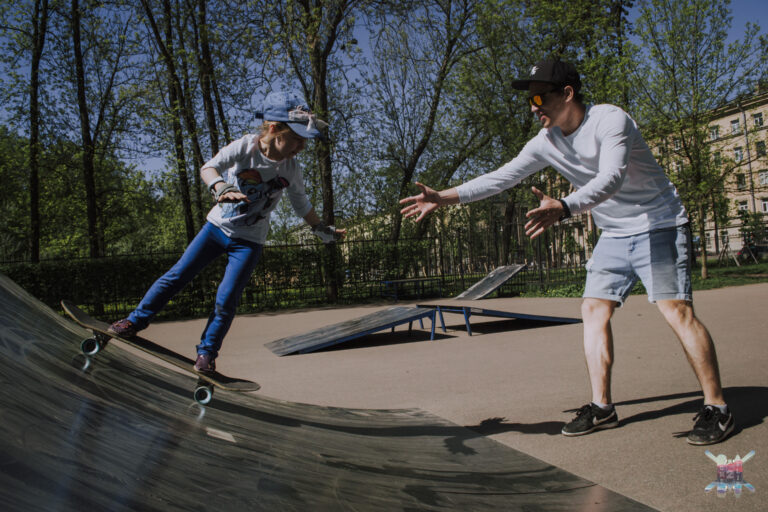
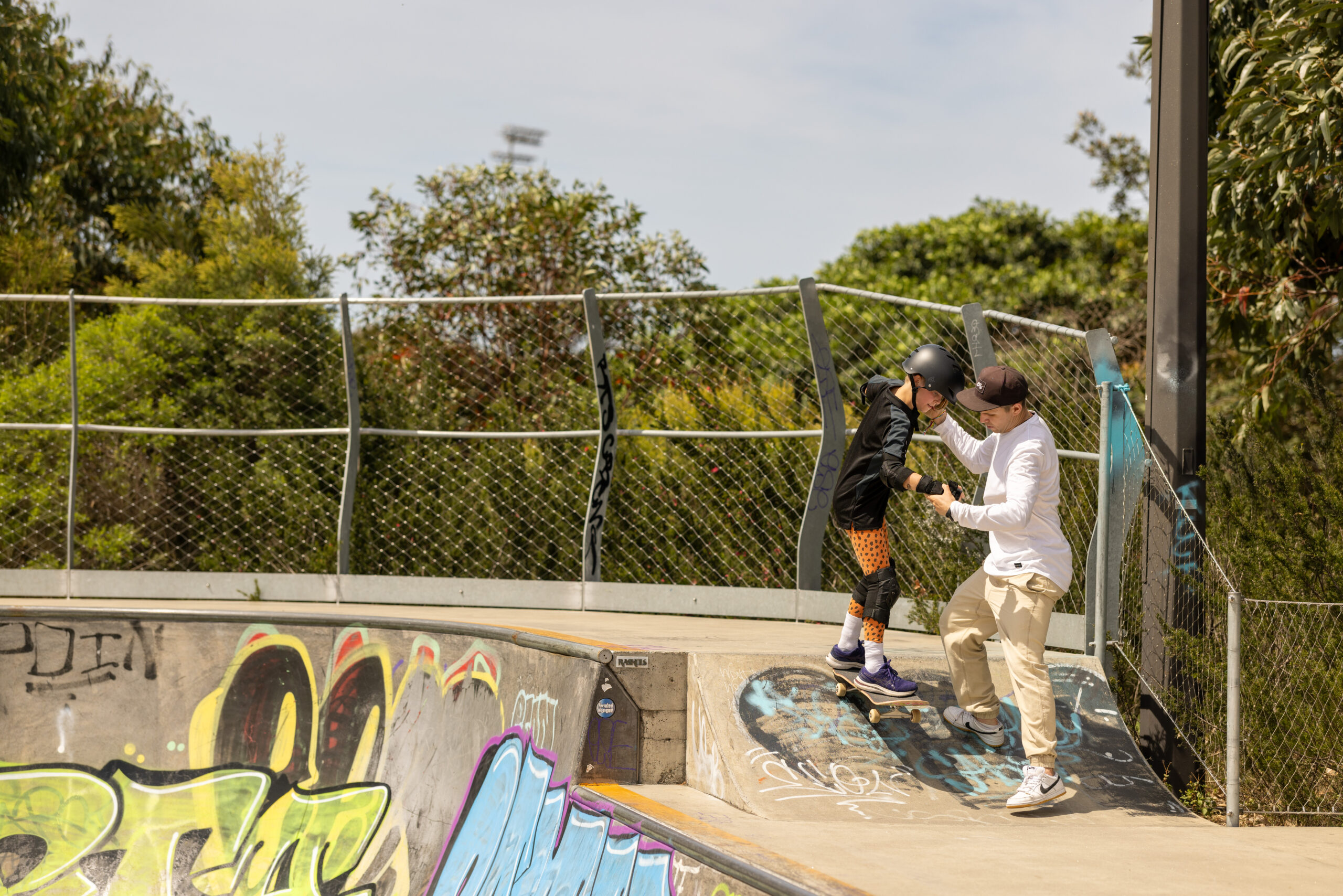
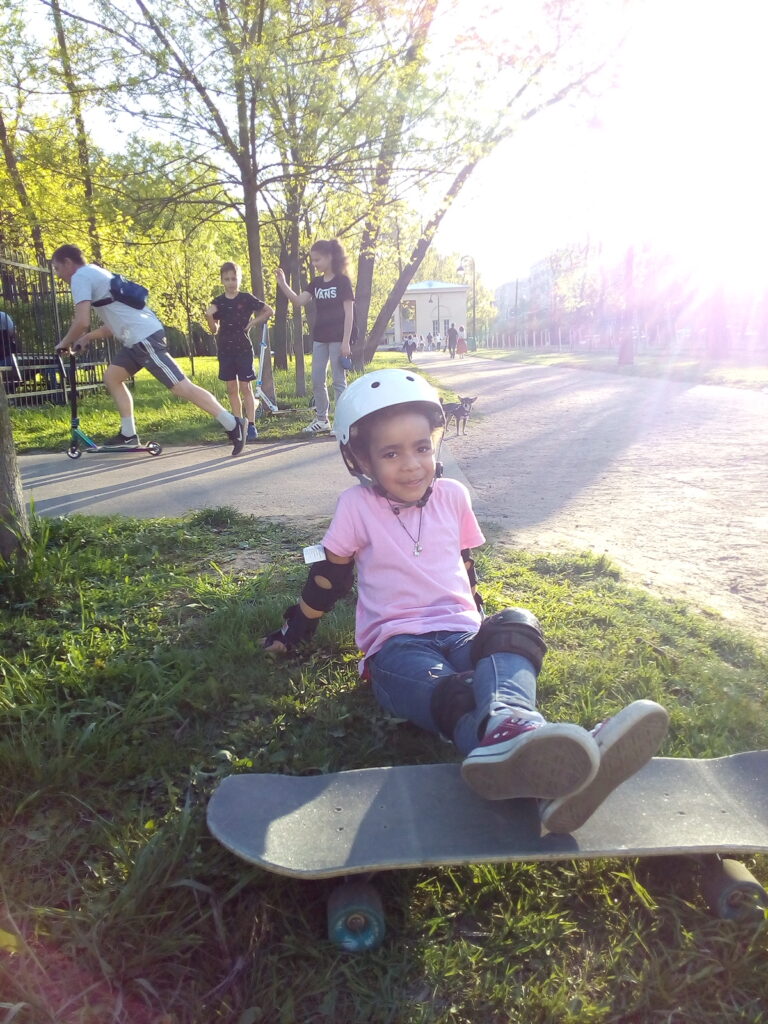
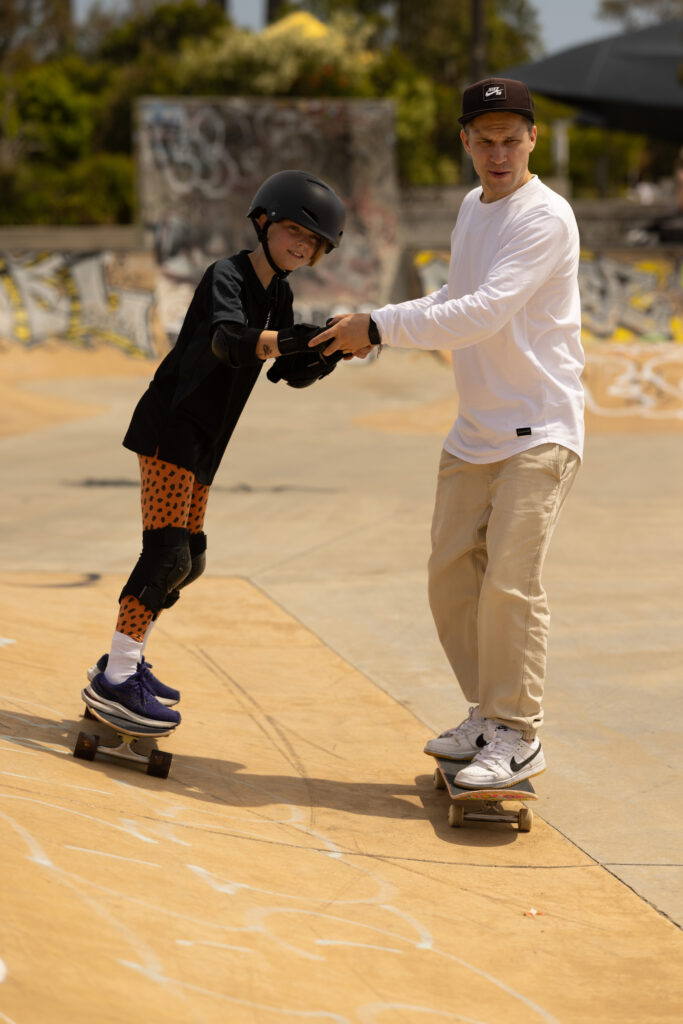
A helmet is not optional, and I will not teach a child without one. Buy it at the same time as the board and let the child choose the colour; a helmet they like is a helmet they will wear. Knee and elbow pads and wrist guards complete the set. Skate shoes with a flat sole are ideal, but any flat trainers will do to begin with.
Not sure? Ask me first
One2Flip is not a shop and I do not sell boards. But if your child is a student of mine, or is about to become one, I am happy to look at what you are thinking of buying and tell you honestly whether it is right, or to set the board up properly once you have it. Just ask at the lesson, or mention it when you book. You can also simply use one of my boards for the first few lessons and buy once you know your child is keen.